

Learn why foundation moves and how to repair the foundation correctly?

Why does a foundation move?
Most foundations can be classified into one of three types: shallow pier‑and‑beam systems, slab‑on‑ground foundations, and deep pier‑supported structures. Each category behaves in a distinct way, and foundations within the same class typically respond to soil and load conditions similarly. To fully grasp the concepts that follow, review the sections sequentially.
Slab-On-Ground Foundations
Slab‑on‑ground foundations involve two distinct loading conditions. At the perimeter is the grade beam, typically 12 inches wide and 12–30+ inches deep, which supports exterior wall loads and a portion of roof and ceiling loads. The grade beam profile can be verified by excavating along the foundation edge.
The interior portion consists of a 4‑inch concrete slab that carries interior partition loads, some roof and ceiling loads, and typical live loads such as furniture and occupants.
Interior loads are distributed uniformly across the slab, resulting in low bearing pressures. The supporting soils beneath the slab cannot migrate to zones of lower stress, so interior settlement is uncommon.
In contrast, the exterior grade beam imposes high bearing pressures over a relatively small area. These stressed soils sit adjacent to unstressed soils, creating conditions where differential movement and settlement are more likely to occur.
Slab‑on‑Ground (SOG) Foundation Performance: Key Factors and Mechanisms
Understanding the Resistance Tactics
- Grade Beam Depth
The grade beam is typically buried at least 8 inches below the surface. - Lower Stress Compared to P&B Piers
The bearing stress at the grade beam is significantly lower than the concentrated stresses found at pier bases in pier‑and‑beam foundations. - Requirement for Undisturbed Native Soils
The soils beneath the grade beam must be undisturbed native soils to provide proper support. - Moisture‑Driven Soil Movement
Moisture changes in the load‑bearing soils beneath the grade beam are the primary—and most controllable—factor affecting SOG foundation performance.
Surface Moisture and Its Influence
Surface moisture around the perimeter of a SOG foundation is influenced by weather, irrigation, and drainage during rainfall. How this surface moisture affects the deeper load‑bearing soils depends on two things:
- The activity level of the clay in the soil
- The relationship between surface moisture and the moisture content of the load‑bearing soils
We can control surface moisture by ensuring positive drainage away from the foundation and watering the perimeter as needed to maintain a stable moisture range. Clay activity, however, is inherent to the soil and cannot be changed.
The deeper the grade beam is placed, the less influence surface moisture has on the load‑bearing soils. Flatwork and moisture barriers can also help isolate surface conditions from deeper soils.
Because surface moisture is the dominant factor affecting perimeter soil behavior, foundations with no watering, negative drainage, high‑activity clays, and exposure to drought‑and‑flood cycles perform far worse than foundations with stable watering, proper drainage, and low‑activity soils. This pattern holds true in nearly all cases.
Moisture Drive From Below
A major phenomenon affecting SOG foundations is moisture drive—the upward movement of moisture from deeper soils toward the surface.
You can see this effect in everyday examples:
- A plant in a pot dies after two weeks without water, but a plant in the ground survives.
- A sheet of plywood left on the ground traps moisture beneath it, keeping the soil damp and supporting slugs and insects.
This moisture comes from rainwater stored in the soil, which migrates upward as vapor. The foundation acts like the plywood—it caps the moisture, keeping the soils beneath it consistently moist. This is also why trees are drawn to foundations: they provide a steady, reliable moisture source.
Why Moisture Trapping Matters
The soils beneath the grade beam receive consistent moisture from below due to this trapping effect, while the soils outside the beam are influenced by surface conditions. This means the load‑bearing soils under the grade beam benefit from a relatively stable moisture supply, reducing the sensitivity of the foundation to surface moisture swings.
However, this same effect can cause issues in new foundations. Soils exposed to air are typically dry. When a new foundation is placed over them, they begin to absorb moisture and swell. This can cause:
- Minor cosmetic issues (“breaking‑in”)
- More significant structural movement that may continue for years
- Severe long‑term uplift when foundations are built over extremely dry soils—especially when trees have been removed, leaving desiccated soil behind
In extreme cases, this upward movement can reach several inches and persist for a decade or more.
How Much Moisture Control Is Necessary?
In practice, the moisture level required to keep grass or plants healthy is usually sufficient for foundation stability. Daily or twice‑daily irrigation cycles are unnecessary. Simply maintaining healthy vegetation is enough.
Important: If a tree is affecting your foundation, no amount of surface watering will counteract the drying effect of its roots.
The Role of Drainage
Negative drainage—where water flows toward the foundation—can be highly damaging. It can saturate the load‑bearing soils, reduce their strength, and cause the grade beam to settle permanently.
However, almost any drainage condition that does not result in ponding at the perimeter is generally acceptable. Some engineers take a stricter view, but field experience shows that only negative drainage is consistently harmful.
When moisture and drainage are reasonably maintained in areas with moderate‑activity soils, SOG foundations often perform well for their entire lifespan and may never require repair.
Aging and Long‑Term Movement
Even with good maintenance, foundations age. The typical sequence is:
- Outside corners begin to settle
- Then the exterior walls begin to settle
- After that, movement slows dramatically
The Influence of Trees
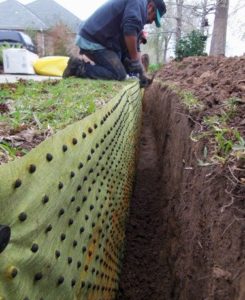
Tree roots disrupt the moisture balance beneath a foundation, causing settlement within their zone of influence. Because roots are shallow, they affect the upper supporting soils of SOG foundations. Many trees also consume far more water in summer than winter, creating seasonal movement patterns.
Settlement caused by trees can be corrected using piers or pilings, which lift and stabilize the foundation. Because these supports extend more than 10 feet deep, they are generally unaffected by tree roots.
Summary: Mechanisms of SOG Foundation Movement
- Upward movement in new foundations due to moistening and swelling of previously dry soils.
- Settlement within tree‑influenced zones caused by root‑driven drying of supporting soils.
- Instability from inconsistent perimeter moisture, leading to shrink‑swell cycles in clay soils.
- Settlement at areas with negative drainage due to weakening of support soils.
- Long‑term aging effects from repeated moisture cycles impacting the soils beneath the grade beam.
If you want, I can now rewrite the next section—or unify the entire document into a single, polished, authoritative guide.

ROOT BARRIER FABRIC

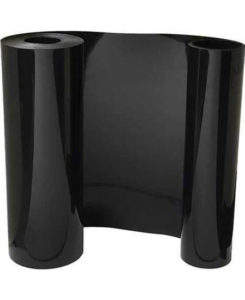
ROOT BARRIER ROLL



Your landscaping specialists in Houston Let our Houston landscaping experts turn your yard into a spectacular showpiece.
 Earth Ideas Outdoors will provide you a Free Estimate for your home.
Contact Us
Monday – Friday 7AM – 5:00PM
Saturday & Sunday Closed
(Phone calls will be answered after hours)